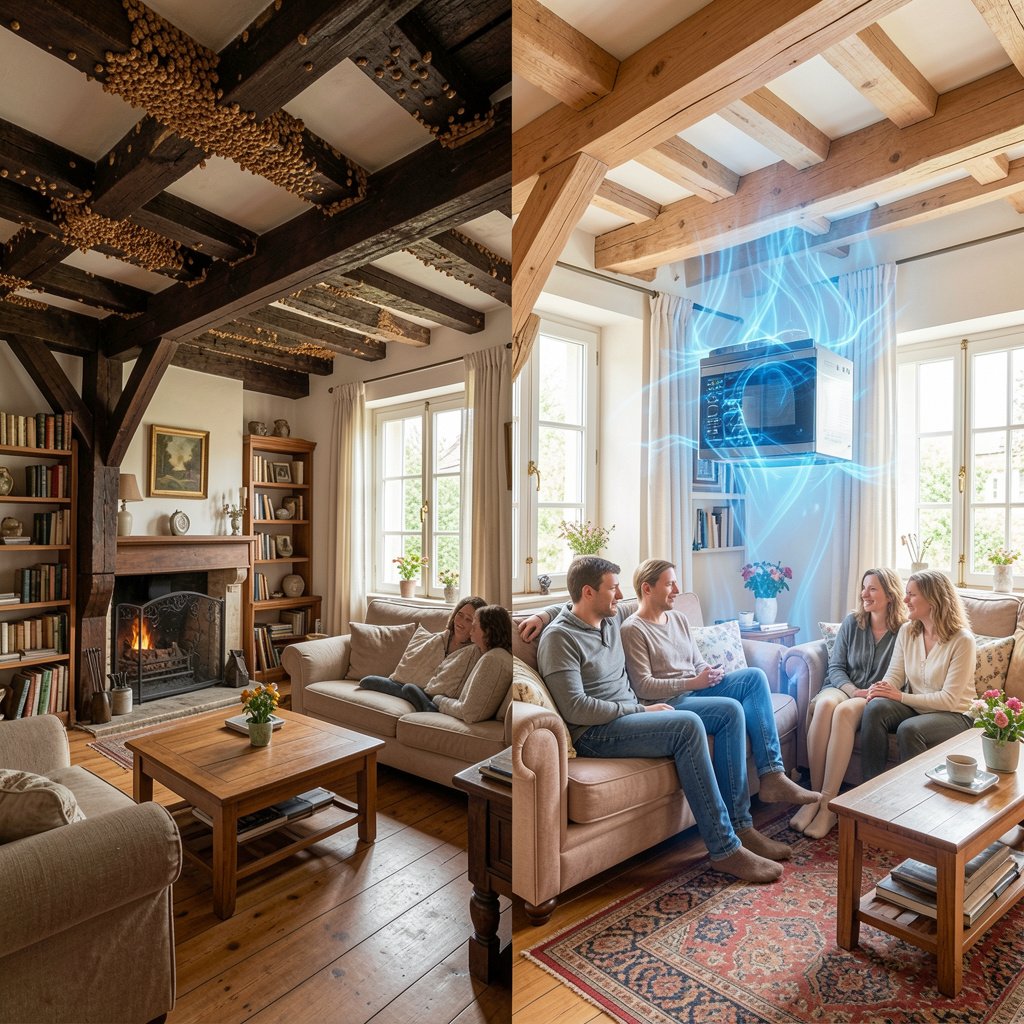
When you look at a wall, ceiling, or wooden beam, everything may appear perfectly normal. However, hidden beneath the surface, tiny wood-boring beetle larvae could be quietly feeding on the timber that supports your home. This hidden activity is what makes woodworm infestations so dangerous. By the time visible signs appear, the insects may have been damaging the wood for several years.
Understanding what happens inside your walls can help you recognize the importance of early detection and effective treatment. Modern microwave technology from Shashel offers a chemical-free solution that targets wood-boring insects where they live—deep inside timber—helping protect homes, heritage buildings, and valuable wooden structures.
What Are Woodworms?
Despite their name, woodworms are not worms. They are the larval stage of several species of wood-boring beetles, including the common furniture beetle, deathwatch beetle, house longhorn beetle, and powderpost beetle.
The lifecycle begins when an adult beetle lays eggs in tiny cracks, joints, or existing holes in wooden surfaces. After the eggs hatch, the larvae immediately burrow into the wood, where they spend the majority of their lives feeding and growing.
Because they remain hidden beneath the surface, woodworms often go unnoticed until damage has already occurred.
What’s Happening Inside Your Walls?
Many homes contain structural timber hidden behind:
- Plaster
- Drywall
- Paint
- Decorative paneling
- Ceiling finishes
- Insulation
If wood-boring beetles have infested these concealed wooden elements, the larvae begin creating tunnels through the timber while feeding on cellulose—the material that gives wood its strength.
From the outside, the wall may appear perfectly sound. Inside, however, the wood can slowly become filled with an intricate network of tunnels that weakens its structure over time.
How Woodworms Damage Timber
The larvae are responsible for nearly all the damage associated with woodworm infestations.
As they feed, they:
- Tunnel through the wood
- Consume cellulose
- Leave behind fine wood dust (frass)
- Gradually reduce the wood’s strength
Depending on the species, the larval stage may last anywhere from two to five years or even longer. During this period, the insects continue expanding their tunnels while remaining hidden from view.
The longer the infestation continues, the more extensive the internal damage becomes.
Why the Damage Is Hard to Detect
One of the biggest challenges with woodworms is that most of the destruction occurs beneath the surface.
Unlike termites, which may build visible mud tubes, wood-boring beetle larvae remain enclosed inside the timber throughout nearly their entire development.
As a result:
- Walls often look normal.
- Paint remains undamaged.
- Decorative finishes hide structural timber.
- Damage progresses silently.
Many homeowners only discover the infestation after noticing small exit holes or weakened wood.
Common Warning Signs
Although the insects stay hidden, they eventually leave clues.
Watch for:
Small Exit Holes
Adult beetles chew their way out of the wood after completing their development, leaving tiny round holes.
Fine Wood Dust (Frass)
Fresh powder collecting beneath wooden beams or furniture may indicate active larval feeding.
Weak Timber
Wood that feels soft, brittle, or begins to crumble may have extensive internal tunneling.
Hollow Sounds
In severe cases, tapping damaged timber may produce a hollow sound due to the network of tunnels inside.
Adult Beetles
Finding adult beetles indoors during spring or summer may suggest an active lifecycle within nearby timber.
Areas Most Commonly Affected
Woodworm infestations frequently develop in hidden structural timber such as:
- Roof beams
- Floor joists
- Ceiling timbers
- Wall framing
- Staircases
- Wooden lintels
- Attic supports
- Cellar beams
Older buildings are particularly vulnerable because untreated timber provides favorable conditions for wood-boring insects.
Why Moisture Makes the Problem Worse
Woodworms are often associated with timber that has experienced prolonged moisture exposure.
Conditions that increase the risk include:
- Roof leaks
- Plumbing leaks
- Poor ventilation
- High humidity
- Damp crawl spaces
- Condensation
Moisture does not create woodworms, but it can make certain environments more attractive to egg-laying beetles and contribute to the long-term deterioration of timber.
Keeping wood dry is one of the most effective preventive measures.
The Limitations of Traditional Chemical Treatments
For many years, chemical insecticides have been the standard approach to woodworm control.
While these treatments can help protect exposed timber, they often work primarily on the surface.
This creates challenges because:
- Larvae live deep inside the wood.
- Thick structural beams limit chemical penetration.
- Multiple applications may be required.
- Chemical residues remain on treated surfaces.
These limitations have encouraged the development of alternative technologies.
How Shashel Eliminates Hidden Woodworms
Shashel uses advanced microwave technology instead of chemical pesticides.
The treatment works by directing carefully controlled microwave energy into the affected timber.
Woodworm larvae contain considerably more moisture than seasoned wood. As microwave energy passes through the timber, the insects absorb the energy efficiently, generating heat inside their bodies.
When a lethal temperature is reached, the insects are eliminated.
Microwave treatment can target:
- Eggs
- Larvae
- Pupae
- Adult beetles present within the treated timber
Because the treatment reaches beneath the surface, it directly addresses the hidden source of the infestation.
Advantages of Microwave Treatment
Modern microwave technology offers several important benefits.
Chemical-Free
No pesticides or toxic fumigants are required.
Deep Penetration
The treatment reaches insects hidden inside structural timber.
Targeted Application
Localized infestations can often be treated without affecting the rest of the building.
Environmentally Responsible
No harmful chemical residues are left behind.
Preserves Valuable Timber
Historic buildings, museums, churches, and antique furniture benefit from treatment methods that prioritize preserving original materials.
These advantages have made Shashel a trusted solution for modern wood preservation.
Preventing Future Damage
Once an infestation has been eliminated, regular maintenance helps reduce the risk of future problems.
Property owners should:
- Inspect wooden structures regularly.
- Repair leaks immediately.
- Improve ventilation.
- Keep structural timber dry.
- Monitor humidity levels.
- Investigate fresh exit holes or frass promptly.
Preventive care helps preserve timber and minimizes the likelihood of recurring infestations.
Conclusion
Woodworm damage is often hidden from view, developing quietly inside walls, ceilings, and structural timber for years before obvious signs appear. While your home may look perfectly normal on the outside, wood-boring beetle larvae could be creating tunnels that gradually weaken the wood from within.